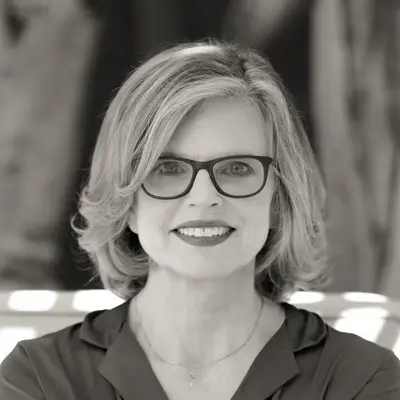
Caitlin Flanagan
Professional
Caitlin Flanagan has written for The Atlantic since 1999. Her work has also appeared in a wide variety of publications such as The New York Times, The Washington Post, The New Yorker, and most of the other usual suspects. She has written three books: To Hell with All That, Girl Land, and On Thinking for Yourself. Her essays have been widely anthologized, including in places like Best American Essays, Best American Travel Writing and Best American Magazine Writing. She has the embarrassing distinction of being the Susan Lucci of National Magazine Award nominations(8), yet she did break through one time. In 2019 she was a finalist for the Pulitzer Prize for Commentary. She lives with her husband in Pasadena, California and pretends she is a character in a Sunset Magazine story circa 1957.
Personal
I was a child during “the tumultuous 60’s” in one of the most tumultuous cities, Berkeley California. The experiences from that upbringing shaped me deeply, as did the several years I lived in Ireland during my father’s sabbatical years which occurred during the height of the height of the Troubles. In literary terms the biggest influence on me was the rise of what ended up being called “the new journalism”. I was a teenager when I began reading it, so I didn’t know what had come before it, but still I could tell that what was happening in those essays was brand new, sizzling, and completely for me. This was before the death of print, and the mailbox at my house would have a magazine in it two or three times a week: Rolling Stone, which was produced over the bridge in San Francisco, printed on newsprint; Esquire, which had great essays and the annual Dubious Achievement Awards, which I loved; the New Yorker, which I read for the Pauline Kael movie reviews; New York magazine, which gave me a certain impression of New York life. I still remember reading the two-part essay that became Saturday Night Fever. I realize now that it was a dreadful story, but at 16 I thought it was riveting because it was about love and rejection and going out at night. Then there were Time and Newsweek - unrecognizable from their current versions. The articles were long, the product of serious reporting, and if you read Time magazine you were in sync with at least 4 million other readers. It was respected, part of the establishment, and during my youth largely concerned with the Vietnam war. Of course we got TV Guide but so did almost everyone else. In 1970 its circulation was 70 million. You didn’t read it as a magazine, you read it the way you read the racing form.
I lived in the Berkeley Hills and I remember looking out my bedroom window toward campus and knowing that Pauline Kael, Joan Didion and Susan Sontag had all been students there, so it must be possible for a girl who hadn’t just studied in Berkeley but had been born and raised there to blast herself out of her circumstances and into the word of essay writing. Nora Ephron was the other major California essayist - and newspaper woman - of the time whose work I liked, but she wasn’t a Berkeley girl. She had grown up in Beverly Hills and gone to Vassar.
Advice to young writers: read. Find the kind of writing you love and then read everything you can get your hands on from the same tradition.